Not everyone loves the gym — and that’s okay.
The loud music, crowded machines, confusing equipment, and intense fitness culture can be intimidating, overwhelming, or simply not your vibe. But just because you dislike the gym doesn’t mean you’re destined to live a sedentary life.
Exercise is much broader than dumbbells and treadmills. It’s about movement — and there are hundreds of ways to move your body that don’t involve a gym at all.
In this article, you’ll discover practical strategies to start exercising (and enjoy it!) even if you’ve always said, “I hate working out.”
Step 1: Redefine What “Exercise” Means
Let’s start by removing the pressure. Exercise doesn’t need to be:
- Long or intense
- Done in athletic clothes
- Focused on weight loss
- Performance-based
- Something you dread
Exercise = movement with purpose.
It could be a walk with your dog, dancing in your kitchen, hiking, swimming, stretching, or gardening. If it gets your body moving and makes you feel good, it counts.
Step 2: Identify Why You Want to Move
If you’re not motivated by aesthetics or fitness goals, that’s totally normal. But having a personal why makes a difference.
Ask yourself:
- Do I want more energy during the day?
- Am I trying to manage stress?
- Would I like to feel stronger or sleep better?
- Do I want to improve my mood?
When movement aligns with how you want to feel, it becomes more meaningful — and easier to stick with.
Step 3: Start With What You Enjoy
Forget what fitness influencers say. Your body responds best to consistency — and consistency comes from enjoyment.
Here are some gym-free movement ideas to explore:
Walking
Simple, free, low-impact. Great for clearing your mind and improving circulation.
Dancing
Turn on your favorite playlist and move however feels natural. It’s joyful, expressive, and a serious cardio boost.
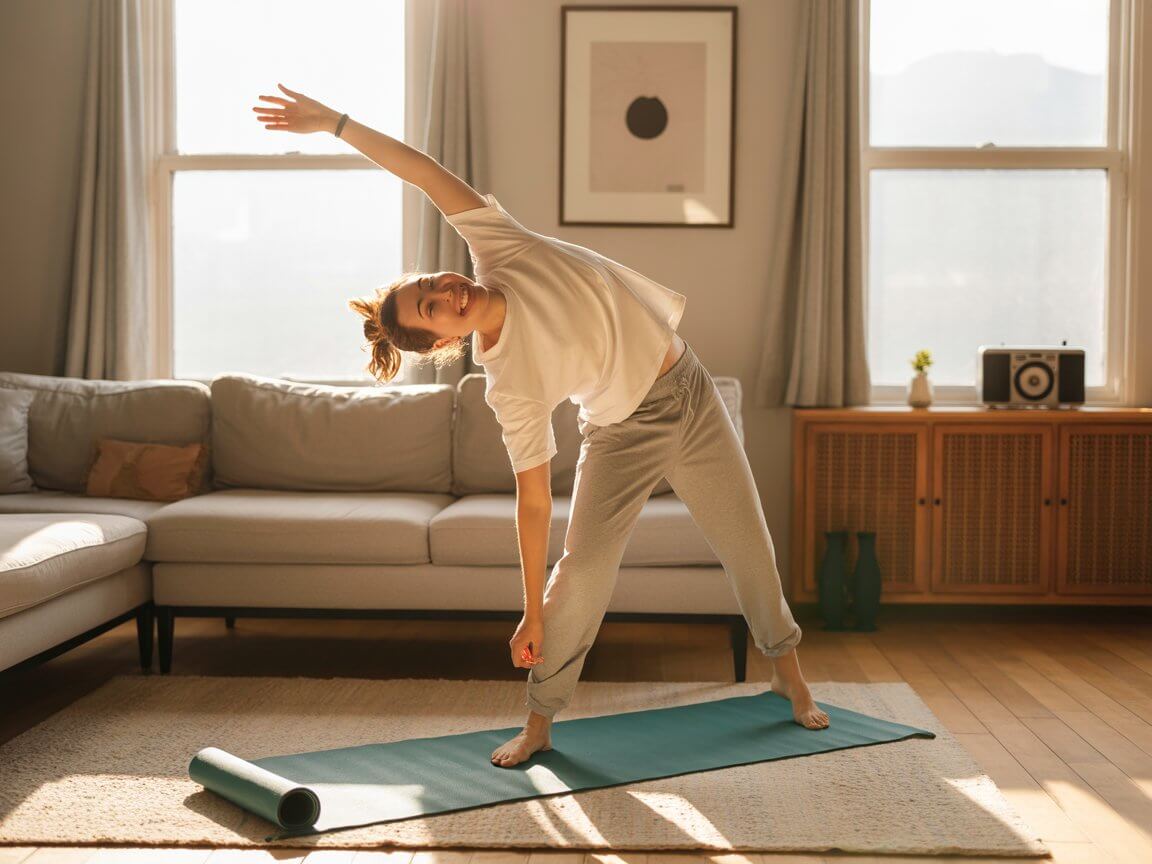
Stretching or Yoga
Great for flexibility, balance, and relaxation. Try short online classes or follow your own flow.
Hiking
If you enjoy nature, hiking provides movement + mental reset. Bonus: fresh air and beautiful views.
Home Workouts
YouTube is full of free routines: Pilates, barre, strength training, or mobility sessions.
Swimming
If you have access to a pool, swimming is gentle on joints and amazing for full-body strength.
Playing with Kids or Pets
Chasing your dog or dancing with your toddler counts — and it makes movement fun.
Step 4: Set the Bar Low (On Purpose)
Starting small is powerful. The goal is to build momentum, not exhaustion.
Try this:
- 5-minute stretch in the morning
- 10-minute walk after lunch
- 1 dance song before dinner
- 10 bodyweight squats during a break
Small efforts add up — and they make movement part of your life instead of something you have to “fit in.”
Step 5: Make It Part of Your Routine
Create a system that supports your habit, rather than relying on willpower.
Tips:
- Link movement to another habit (e.g., walk after coffee)
- Keep your workout clothes visible
- Use reminders or calendar events
- Have a “default” option for busy days (like a 5-minute routine)
- Track your wins, not perfection
Consistency is more important than intensity. Move regularly, even if it’s light or brief.
Step 6: Ditch the “All or Nothing” Mindset
You don’t need a perfect plan or a full hour of sweat to be successful.
Skipped yesterday? It’s okay. Start again today.
Too tired for a workout? Stretch for 3 minutes.
Busy week? Take the stairs or do a walking meeting.
Progress is non-linear — and you’re allowed to move in ways that fit your life and capacity in the moment.
Step 7: Make It Social or Rewarding
Movement doesn’t have to be solo or boring. Add fun and connection into the mix.
Ideas:
- Join a local walking group
- Try a dance class with a friend
- Share your wins with someone supportive
- Reward yourself (non-food) for weekly consistency
- Listen to podcasts or audiobooks while moving
When exercise becomes something you look forward to, it becomes sustainable.
Step 8: Celebrate How You Feel — Not How You Look
One of the biggest traps in fitness culture is obsessing over weight, shape, or “results.”
Shift your focus to:
- More energy
- Reduced stress
- Better sleep
- Improved confidence
- More ease in daily tasks
- Feeling stronger and more mobile
These are the real, meaningful benefits of regular movement — and they’re available to everyone, gym or no gym.
What If You’ve Tried Before and Quit?
That’s normal. The key is to learn from past attempts — not judge yourself for them.
Ask:
- Was the routine too intense?
- Did I choose something I didn’t enjoy?
- Was I aiming for perfection instead of consistency?
Use that insight to create a softer, more flexible approach this time.
Movement should support your life — not stress you out.
Sample Week: 15–20 Minute Daily Movement Plan (Gym-Free)
Monday: Morning stretch + 10-minute walk after lunch
Tuesday: YouTube beginner yoga class (15 minutes)
Wednesday: Dance to 3 favorite songs after work
Thursday: 10 squats, 10 pushups (knee), 10 glute bridges – repeat 2x
Friday: Nature walk or light hike
Saturday: Rest or mobility flow
Sunday: Try a new activity or go for a long walk
Remember, flexibility is part of the plan.
Final Thoughts: You Deserve to Move in a Way That Feels Good
You don’t need a six-pack, fancy leggings, or a gym membership to be active. You just need a body and the willingness to care for it gently and consistently.
Forget fitness fads. Forget pressure.
Instead, focus on feeling alive, empowered, and connected to your body — on your terms.
You don’t hate exercise. You just haven’t found your way to move yet.