We often think of clutter as just a physical nuisance — a messy desk, a crowded closet, or that pile of papers you’ll “get to later.” But clutter is more than just stuff. It has a direct and measurable effect on your mental health, emotional clarity, and overall well-being.
If you’ve ever felt anxious in a messy room, distracted while trying to work, or overwhelmed by too many belongings, you’ve already experienced the psychological weight of clutter.
In this article, you’ll discover how decluttering affects your brain, why it improves emotional resilience, and how you can start creating a more peaceful, focused space — one small step at a time.
The Hidden Mental Toll of Clutter
Clutter is anything that gets in the way of your ease, clarity, or peace of mind. It creates:
- Visual noise: Overstimulates your brain with too many objects and choices
- Mental fatigue: Constant reminders of unfinished tasks
- Stress and tension: Difficulty relaxing in your own space
- Shame or guilt: Feeling like you’re “failing” at staying organized
- Disconnection: Loss of attachment to what truly matters
The more clutter you see, the more mental “open loops” your brain tries to process — draining your attention and energy.
What the Research Says
- A study published in the Personality and Social Psychology Bulletin found that women who described their homes as “cluttered” or “unfinished” had higher levels of cortisol, the stress hormone.
- Neuroscientists at Princeton University found that visual clutter competes for your attention, making it harder to focus and complete tasks.
- UCLA researchers discovered that the presence of clutter impacts mood, family dynamics, and the ability to relax.
In short: clutter doesn’t just affect your space — it affects your mind, emotions, and daily behavior.
How Decluttering Supports Your Mental Health
1. Reduces Stress and Anxiety
A cleaner space signals safety and simplicity to your brain. It reduces the background “noise” that keeps your nervous system in fight-or-flight mode.
2. Increases Focus and Productivity
With less distraction, your mind can focus better. You’ll find it easier to complete tasks, make decisions, and enter flow states.
3. Improves Sleep
Clutter in the bedroom is linked to poorer sleep quality. Decluttering creates a calm environment that encourages rest.
4. Boosts Emotional Clarity
Letting go of physical items often parallels letting go of emotional baggage. You feel lighter — both inside and out.
5. Builds Confidence and Empowerment
Each area you organize gives you a sense of control. That confidence carries over into other areas of your life.
The Emotional Side of Clutter
Clutter isn’t just “stuff.” It often carries emotional weight.
- Old clothes = guilt about body image or past identity
- Unused gifts = fear of offending someone
- Sentimental items = grief, nostalgia, or unresolved memories
- Paper piles = overwhelm or avoidance
This is why decluttering can feel so intense — you’re not just moving objects. You’re facing stories, attachments, and decisions.
The goal isn’t to throw everything away — it’s to keep what supports who you are now.
How to Start Decluttering (Without Overwhelm)
1. Start Small and Specific
Don’t aim to declutter your whole house in a weekend. Pick one drawer, one shelf, or one category.
Examples:
- The junk drawer
- Your bathroom countertop
- The shoes by the front door
Success builds momentum.
2. Use the “Keep, Donate, Toss” System
As you go through items, create three piles:
- Keep: Things you use and love
- Donate: Things in good condition but no longer useful to you
- Toss: Broken or expired items
Trust your instincts — if it brings you stress, let it go.
3. Ask Powerful Questions
- Do I use this regularly?
- Does it add ease or joy to my life?
- Am I keeping this out of guilt or obligation?
- Would I buy this again today?
If the answer is no, consider letting it go.
4. Set a Timer
Work in short, focused sessions — 15, 30, or 60 minutes.
This keeps you from getting overwhelmed and helps build a decluttering habit.
5. Celebrate Progress
Each cleared surface is a win. Each box donated is emotional weight lifted.
Take photos before and after. Light a candle. Share your progress with a friend.
You’re not just organizing — you’re healing.
Room-by-Room Mental Health Boosters
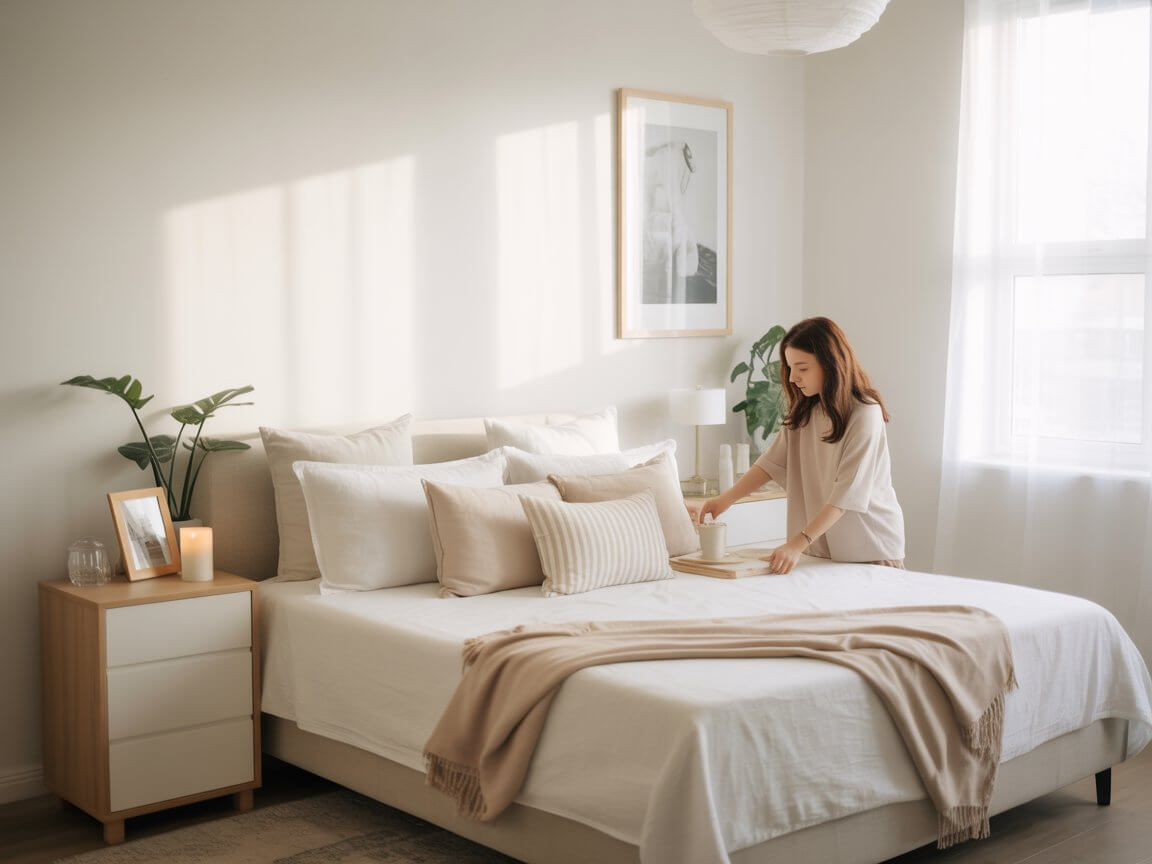
🛏️ Bedroom
- Clear nightstands of books, receipts, chargers
- Keep only calming items in sight (lamp, journal, plant)
- Remove excess clothes from under the bed
A tidy bedroom = better sleep and emotional regulation.
🧠 Office or Desk
- Limit desktop items to what you need daily
- Hide cords and sort papers into labeled folders
- Keep a “focus object” nearby (plant, photo, or intention)
A clean desk helps reduce decision fatigue and mental clutter.
🛁 Bathroom
- Toss old makeup, expired products, or unused items
- Keep surfaces minimal and clean
- Use baskets to group toiletries
Start and end your day in peace.
🍽️ Kitchen
- Clear counters of non-essentials
- Organize pantry for visibility and ease
- Toss mismatched containers or unused gadgets
A clean kitchen supports better food choices and calmer meals.
Decluttering and Emotional Resets
When your space feels lighter, your mind follows.
Try pairing decluttering with:
- Deep breathing
- Uplifting music
- Aromatherapy (lavender, lemon, eucalyptus)
- A mantra like “Letting go makes space for peace.”
Make the process nurturing, not punishing.
When Decluttering Feels Too Hard
Sometimes clutter is tied to trauma, grief, or deep emotional attachment. That’s okay.
- Go slow.
- Get support from a trusted friend or therapist.
- Start with “low-emotion” areas (junk drawer, expired pantry items).
- Remind yourself: You are not your belongings.
Letting go is an act of self-respect — not failure.
Final Thoughts: Clear Space, Clear Mind
Decluttering isn’t about being minimalist or aesthetic. It’s about mental health, emotional clarity, and reclaiming your energy.
A tidy space doesn’t mean a perfect life — but it creates a foundation for peace, intention, and healing.
So start small. One drawer. One surface. One deep breath.
Let your space reflect the version of you that you’re becoming — grounded, present, and free.
When you clear your space, you make room for more of what matters.