Anxiety can make the mind feel like it’s spinning out of control—caught in future worries, what-ifs, and overwhelming thoughts. Grounding is a powerful technique that helps pull you out of those mental spirals and bring you back to the present moment.
These simple yet effective practices can reduce emotional intensity, calm the nervous system, and reconnect you with your body and surroundings. Whether you’re feeling anxious, dissociated, or just unsteady, grounding can help you feel safe and in control again.
What Is Grounding?
Grounding refers to any practice that brings your focus away from anxious thoughts and back to the “here and now.” It involves using your senses, body, and surroundings to interrupt mental chaos and re-establish emotional safety.
It’s especially helpful during:
- Panic attacks
- High-stress moments
- Emotional flashbacks
- Sleep disruptions
- General overwhelm
By anchoring your awareness in the present, grounding creates space between you and your anxiety.
1. The 5-4-3-2-1 Technique
This classic grounding method uses your five senses to gently shift focus:
- 5 things you can see – Look around and name five things in your environment.
- 4 things you can feel – Touch the chair, your clothing, or your skin.
- 3 things you can hear – Listen for subtle sounds in your surroundings.
- 2 things you can smell – Notice nearby scents or recall familiar ones.
- 1 thing you can taste – Take a sip of water or chew gum mindfully.
This technique is highly effective in reducing acute anxiety and helping you feel safe again.
2. Temperature Shifts
Sudden changes in temperature can “shock” your nervous system out of panic mode.
Try:
- Holding an ice cube
- Splashing cold water on your face
- Taking a warm shower or bath
- Walking barefoot on cool ground
These sensations activate your sensory system and help you return to your body.
3. Grounding Through Movement
Physical movement can help discharge anxious energy from the body.
Options include:
- Stretching or doing slow yoga poses
- Walking barefoot to feel the floor
- Squeezing and releasing your fists
- Gently shaking out your hands and feet
The goal isn’t intense exercise—it’s reconnecting with your body through intentional motion.
4. Use Anchoring Objects
Carrying or holding something with strong sensory feedback can serve as a physical anchor during anxiety.
Examples:
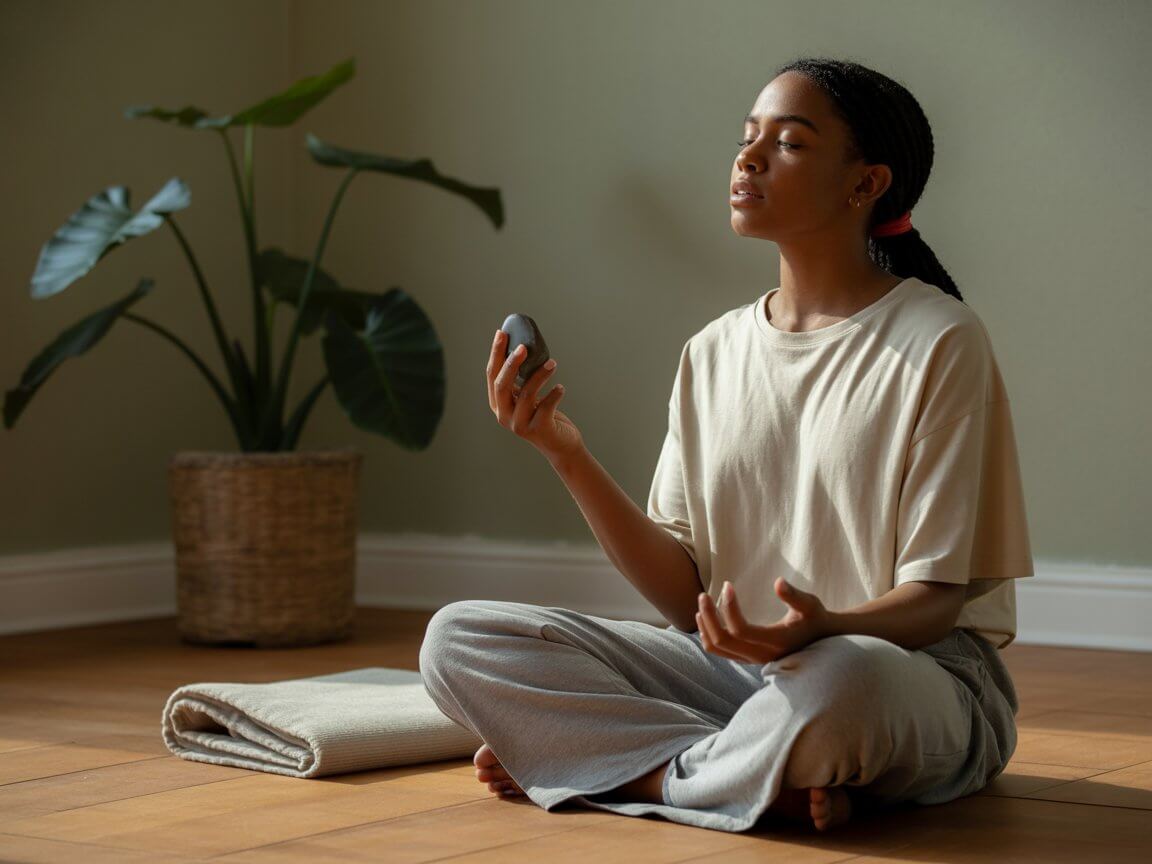
- A smooth stone or crystal
- A textured piece of fabric
- A calming essential oil
- A fidget tool or stress ball
These small objects can be comforting reminders of stability when your emotions feel scattered.
5. Name the Facts
Anxiety thrives in assumptions and uncertainty. Naming facts out loud helps ground your thoughts in reality.
Try saying to yourself:
- “I am safe right now.”
- “I’m in my home, sitting on a chair.”
- “The floor is solid beneath me.”
- “I can take a breath and feel my lungs expand.”
Speaking objective truths can help override irrational or spiraling thoughts.
6. Breathing for Stability
Grounding through breath is gentle and effective. Focus on breathing into your lower belly and extending your exhales.
Try this rhythm:
- Inhale for 4 seconds
- Exhale for 6 seconds
- Repeat for 2–3 minutes
You can also place one hand on your chest and the other on your abdomen to help feel each breath and stay present.
7. Visualization for Anchoring
Imagining safe or calming environments can provide internal grounding.
Visualize:
- A forest trail beneath your feet
- A quiet beach with steady waves
- A cozy cabin filled with warmth and light
Add as much sensory detail as possible to the scene. The more immersive, the more effective the grounding.
When and How to Practice Grounding
Grounding is most effective when practiced before anxiety escalates—but it’s never too late. Try incorporating at least one grounding practice into your daily routine, even on calm days. This builds a sense of emotional safety that’s easier to access in difficult moments.
You can also create a personal “Grounding Kit” with objects, scents, or reminders that help you stabilize when emotions run high.
Final Thought: You Are Not Your Anxiety
Anxiety can feel consuming, but it’s not who you are—it’s an experience you’re having. Grounding helps remind you of that truth. It gives you the power to reconnect with your body, your space, and your strength, one breath and one sense at a time.
You don’t have to escape your mind. You can return to it—calmer, steadier, and more grounded than before.