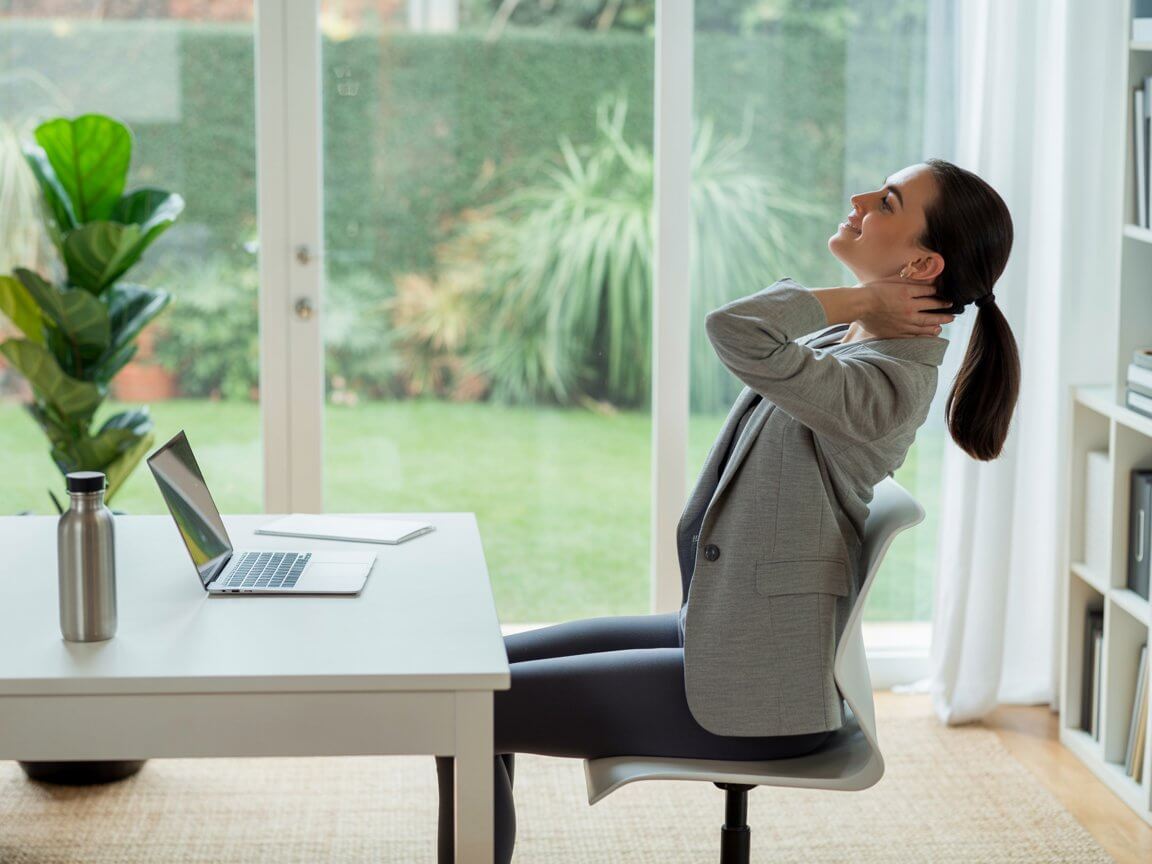
If you spend most of your day sitting at a desk, you’re not alone. Millions of people work from behind screens — often for 8, 9, or even 10 hours a day. But while your brain may be active, your body is stuck in a static position, leading to stiffness, tight muscles, poor posture, and long-term health issues.
Fortunately, there’s a simple solution: desk exercises.
With just a few minutes of intentional movement throughout the day, you can improve circulation, reduce pain, boost energy, and stay focused — without leaving your workspace.
In this article, you’ll learn easy and effective desk exercises that fit into any workday, plus tips to make them a consistent part of your routine.
Why Desk Exercises Matter
Sitting for long periods is associated with:
- Back and neck pain
- Tight hips and hamstrings
- Poor posture and spinal misalignment
- Headaches and eye strain
- Reduced circulation and energy
- Higher risk of cardiovascular disease
Even if you exercise before or after work, interrupting long periods of sitting is essential for keeping your body healthy and pain-free.
How Often Should You Move?
Experts recommend taking a break to stand, stretch, or move every 30 to 60 minutes. Even 2–3 minutes can make a difference in how your body feels and performs throughout the day.
Pro tip:
Set a timer, use a reminder app, or pair movement with tasks (e.g., stretch every time you send an email).
10 Effective Desk Exercises (No Equipment Needed)
These exercises are designed to improve posture, increase circulation, and release tension — right from your desk or office space.
1. Seated Spinal Twist
Targets: spine, lower back
- Sit tall with feet flat on the floor
- Place your right hand on the back of your chair, left hand on your knee
- Gently twist to the right, looking over your shoulder
- Hold 20–30 seconds, then switch sides
2. Neck Stretch
Targets: neck, shoulders
- Sit or stand tall
- Gently tilt your head to the right, bringing your ear toward your shoulder
- Use your right hand to apply light pressure on the side of your head
- Hold 20–30 seconds per side
3. Shoulder Rolls
Targets: shoulders, upper back
- Sit up straight
- Roll shoulders up, back, and down in a circular motion
- Repeat 10 times in each direction
- Do this slowly and breathe deeply
4. Seated Cat-Cow Stretch
Targets: spine, chest, upper back
- Sit at the edge of your chair
- Inhale: arch your back, lift your chest, gaze up (cow)
- Exhale: round your spine, tuck your chin to chest (cat)
- Repeat 5–10 rounds
5. Wrist and Finger Stretch
Targets: wrists, forearms
- Extend one arm in front, palm up
- Use the other hand to gently pull fingers down toward the floor
- Hold 20 seconds per side
- Shake out hands afterward
6. Seated Leg Extensions
Targets: thighs, knees, circulation
- Sit tall and extend your right leg out straight
- Flex your foot and hold for 5 seconds
- Lower and repeat 10 times per leg
- Great for improving lower body circulation
7. Seated Marches
Targets: core, hips
- While seated, lift one knee toward your chest
- Lower and alternate legs as if marching
- Continue for 30 seconds
- Engage your core and keep posture upright
8. Desk Push-Ups
Targets: chest, arms, core
- Stand and place hands on a sturdy desk
- Walk feet back until body is at a diagonal
- Lower chest toward the desk, elbows at 45°
- Push back to start
- Repeat 10–15 reps
9. Standing Calf Raises
Targets: calves, ankles, circulation
- Stand behind your chair, holding for balance
- Rise onto the balls of your feet
- Hold for 2 seconds, then lower slowly
- Repeat 15–20 times
10. Wall or Chair Sit
Targets: thighs, glutes, core
- Stand against a wall or sturdy chair
- Lower into a seated position (as if sitting in an invisible chair)
- Hold for 20–30 seconds
- Increase duration as strength improves
Bonus: Eye and Breathing Break
Eye Relief: 20-20-20 Rule
Every 20 minutes, look at something 20 feet away for 20 seconds to reduce eye strain.
Breathing Reset
- Sit tall, hands on lap
- Inhale for 4 counts
- Hold for 4
- Exhale for 6
- Repeat for 2–3 minutes to lower stress and reset focus
How to Make Desk Exercise a Habit
1. Add Movement Triggers
Link movement to an action you already do:
- Before or after meetings
- After sending an email
- Every time you refill your water
2. Use Visual Cues
Keep a printed list of stretches on your desk or a sticky note as a gentle reminder.
3. Schedule Movement Breaks
Put 5-minute “movement blocks” on your calendar like you would meetings.
4. Get Colleagues Involved
Encourage a short stretch session with your team or take walking meetings.
Other Ergonomic Tips to Prevent Tension
- Adjust your chair so your knees are at 90°
- Keep feet flat on the floor or on a footrest
- Your monitor should be eye level to avoid neck strain
- Use a lumbar support or cushion to maintain posture
- Keep wrists neutral when typing — avoid bending upward
Real-Life Workday Movement Plan
Here’s how a typical workday could include micro-movements and desk exercises:
- 9:00 AM: Start the day with 5 shoulder rolls and neck stretches
- 10:00 AM: Desk push-ups before your next meeting
- 11:30 AM: Seated spinal twist and cat-cow
- 12:30 PM: Walk during lunch
- 2:00 PM: Calf raises and wrist stretches
- 3:30 PM: Chair marches + deep breathing
- 5:00 PM: Full-body stretch before wrapping up
Final Thoughts: Move More, Feel Better
You don’t need to change your job or buy fancy equipment to improve your physical health during the workday. Desk exercises are simple, effective, and take just minutes — yet they can have a massive impact on how your body feels and performs.
So the next time your back feels tight or your energy dips, pause. Stretch. Move. Breathe.
Your body will thank you — one desk stretch at a time.